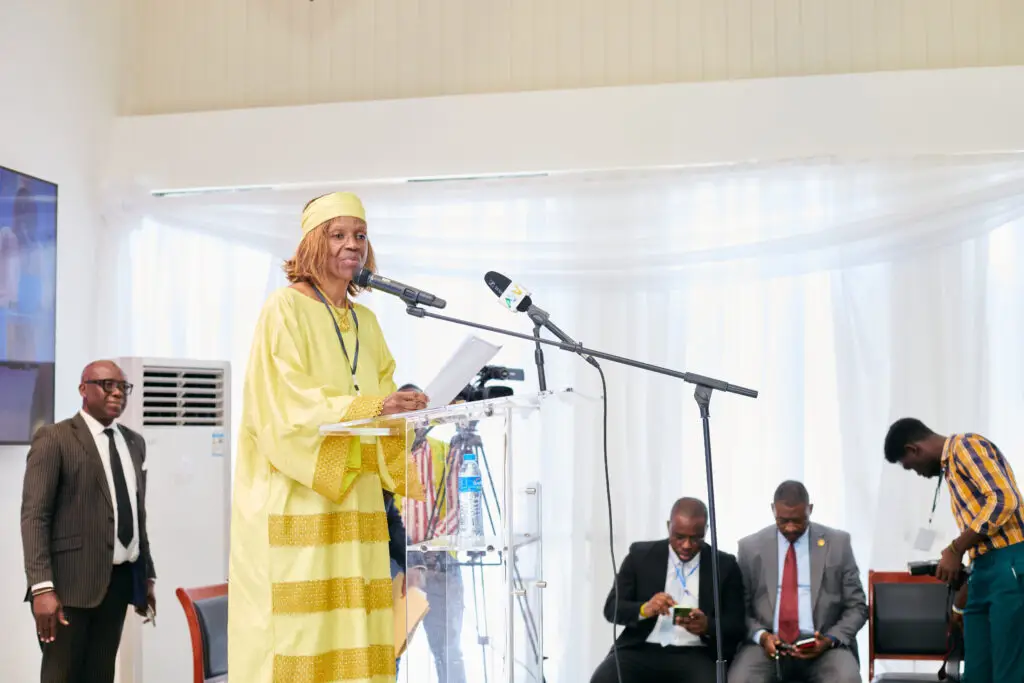
Women and youth drive Sierra Leone’s economy — farming, processing, trading, transporting, and powering local markets across the country. Yet, as highlighted at the National AfCFTA Conference held in Freetown, Sierra Leone (14–17 October 2025), they remain among the groups most constrained by structural barriers that limit their participation in cross-border and formal trade.
The conference dedicated an entire session to the AfCFTA Protocol on Women and Youth, underscoring its importance to Sierra Leone’s long-term transformation. The discussion was not aspirational; it was practical, grounded in the realities women and young entrepreneurs face every day. Here is what the conference revealed — and why it matters.
Understanding the Barriers: What the Report Highlighted
The conference identified several entrenched challenges limiting the ability of women and youth to participate productively under AfCFTA. According to the discussions in the session of conference dedicated to spotlight the issue, these include:
- High Transport Costs
Transport — often the single largest component of trade cost — disproportionately affects women and youth, especially those engaged in small-scale trading or moving agro-products.
- Harassment and Safety Concerns at Border Points
The report documents experiences of intimidation, extortion, and gender-based harassment, which discourage women and youth from engaging in cross-border trade.
- Limited Access to Finance and Financial Literacy
Women and youth are less likely to access formal credit, making it harder to scale production, meet standards, or enter new markets.
- Weak Infrastructure and High Transaction Costs
Poor road networks, limited storage, weak energy systems, and a lack of digital tools all undermine competitiveness.
- Low Levels of Digital Adoption
Limited digital literacy and restricted access to online platforms prevent young entrepreneurs and women-led MSMEs from leveraging e-commerce opportunities highlighted in AfCFTA.
These challenges are not theoretical — they shape daily economic life. The conference treats them as central issues requiring targeted intervention under AfCFTA implementation.
What the AfCFTA Protocol on Women and Youth Offers
The conference outlined practical provisions within the Protocol designed to enable more inclusive trade. They include:
- Removal of Discriminatory Laws and Practices
The Protocol seeks to eliminate legal and institutional barriers that restrict women and youth participation in trade.
- Access to Quality Education, Skills Development & Financial Literacy
The technical session highlights these as essential for building competitive MSMEs and enabling participation in regional value chains.
- Improved Access to Finance
From micro-credit to formal financing, the Protocol encourages mechanisms that specifically target women and youth-led enterprises.
- Safer and More Efficient Border Procedures
A commitment to simplified, transparent, and gender-responsive border processes.
- Support for Innovation, Digital Trade & E-commerce
Technical measures in the Protocol aim to foster digital entrepreneurship and access to online marketplaces.
Each provision aligns directly with the gaps identified for Sierra Leonean traders and MSMEs.
Why This Matters for Sierra Leone’s Economic Priorities
The report’s analysis shows that inclusive trade is not a side conversation—it is central to national development.
- Women and youth are essential to MSME growth
Their participation strengthens domestic value chains, especially in agriculture, processing, retail, fashion, cosmetics, and food industries.
- AfCFTA provides an opportunity to formalise small businesses
Simpler procedures and digital tools open pathways for informal sector players — many of whom are women and youth — to benefit from formal trade incentives.
- Inclusive trade aligns with national strategies
The conference links inclusivity to Sierra Leone’s core development frameworks, including the Big Five Game Changers and MSME support priorities.
- Empowering women and youth strengthens competitiveness
Broad participation increases supply capacity, product diversity, and export readiness — critical for long-term AfCFTA success.
What Sierra Leone Needs to Do Next
The conference outlined priority actions Sierra Leone should consider:
- Mainstream the Women & Youth Protocol into national trade policies
This includes integrating its provisions into sector strategies, MSME policies, and legislative frameworks.
- Improve border systems and trade facilitation processes
Simplified, transparent and gender-responsive procedures are essential.
- Strengthen access to finance and digital tools
Support mechanisms should target MSMEs led by women and youth.
- Build capacity for participation in regional value chains
Training, market information, and technical support will be essential to unlock real opportunities.
- Promote awareness of the Protocol across industries
Most businesses are still unaware of the policy changes and the new opportunities the Protocol creates.
Moving Forward: An Inclusive AfCFTA Starts at Home
The AfCFTA Conference made one message clear: if Sierra Leone wants to maximise the benefits of AfCFTA, women and youth must be at the centre of implementation. The Protocol provides a strong framework, but the real impact will emerge through national action — better policies, better systems, and better support for the everyday traders, producers, and entrepreneurs who power Sierra Leone’s economy. AfCFTA is not just a trade agreement. It is an opportunity to build a more inclusive, competitive and resilient Sierra Leone — and women and youth are key to making that future possible.