
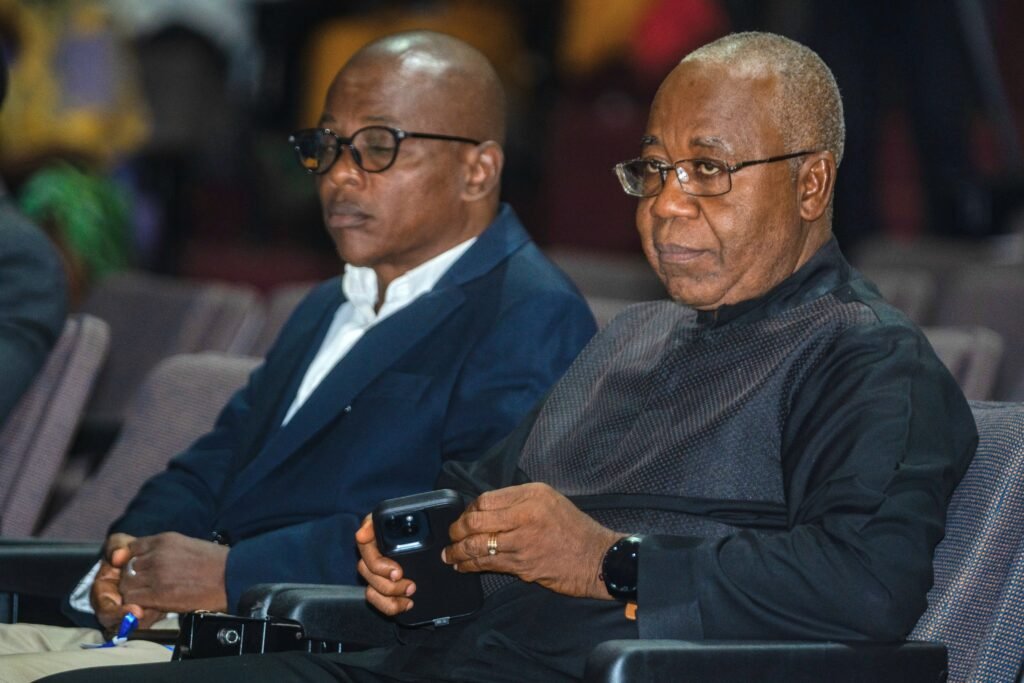
If there was one message that echoed through the policy-focused sessions of the 2025 Manufacturers Conference, it was this: Industrialisation is no longer an abstract aspiration — it is a national imperative.
Over two days, ministers, regulators, technical agencies, private-sector leaders, and development partners tackled the structural issues shaping Sierra Leone’s manufacturing landscape. Their discussions revealed a policy agenda that is maturing, more coordinated, and increasingly aligned with the realities faced by industrial actors on the ground.
This article explores the key policy themes that emerged — the reforms underway, the remaining gaps, and the collective resolve to reposition manufacturing as a central pillar of economic transformation.
- A Stronger Policy Architecture Is Taking Shape — But Execution Remains the Real Test
Across multiple sessions, stakeholders acknowledged the significant strides MTI has taken in updating national policies. These include:
- The National Industrialisation Policy
- The National Trade Strategy (2024–2030)
- Efforts to harmonise national standards with ECOWAS and AfCFTA requirements
- Ongoing reforms in customs automation and trade facilitation
- Work on sector-specific value chain strategies
These reforms signal a stronger, more coherent policy environment. But senior stakeholders also underlined that policy development is only the beginning. Execution — consistent, timely, and data-driven — remains Sierra Leone’s biggest hurdle.
As one participant put it, “We have the frameworks; now we must build the muscle.”
- Standards and Quality Infrastructure Are Emerging as the Cornerstone of Competitiveness
A strong industrial sector cannot exist without credible and reliable standards institutions. Throughout the conference, the Sierra Leone Standards Bureau played a central role, highlighting:
- The urgent need to modernise testing facilities
- The importance of certification for export readiness
- The challenges SMEs face in meeting quality benchmarks
- The role of harmonised regional standards for AfCFTA integration
Participants agreed that without modern quality infrastructure, Sierra Leone cannot scale industrial production or compete regionally. This placed standardisation firmly at the centre of the new industrialisation agenda — not as a compliance burden, but as a foundation for competitiveness.
- The Shift Toward Value Chains Reflects a New Economic Mindset
Policy dialogue consistently moved away from isolated sector interventions towards a more systemic, value-chain approach.
The discussions prioritised:
- Agro-processing value chains
- Light manufacturing (packaging, furniture, textiles)
- Fisheries and blue economy processing
- Pharmaceuticals and emerging green manufacturing
This new outlook recognises that industrialisation does not happen factory by factory; it occurs when sectors become interconnected, when SMEs plug into larger production ecosystems, and when national policies support clustering, processing, and market linkage.
It is a significant evolution — from “supporting industries” to system-building.
- Financing and Investment Policy Must Be Re-Engineered for Industry
One of the strongest recurring themes was the inadequacy of existing financing arrangements for manufacturing. Participants stressed that:
- Interest rates are too high for capital-intensive industries
- Importing machinery requires accessible long-term credit
- SMEs need structured export finance tools
- Banks must be supported to lend to production rather than consumption
The policy discussion made it clear that financial sector reform is essential to industrial growth. Stakeholders called for new instruments, from blended finance to credit guarantees, to unlock private-sector investment and drive factory expansion.
- MSMEs Are Essential to the Industrial Ecosystem — But Require a Targeted Policy Package
MSMEs are the backbone of Sierra Leone’s private sector, yet they face acute challenges that limit their ability to join value chains.
The conference highlighted the need for:
- Simplified standards compliance support
- Access to training and industrial skills development
- Export-readiness programmes
- Better information flow between government and MSMEs
- More inclusive procurement mechanisms
This underscores a policy transition toward industrialisation that is broad-based, youth-inclusive, and SME-driven.
- Stronger Public–Private Coordination Is Now an Unavoidable Priority
The conference revealed a growing consensus: Industrialisation requires a relationship, not a transaction.
Participants recommended:
- More frequent policy consultations
- Faster feedback loops between regulators and manufacturers
- Joint monitoring of industrial policy implementation
- Empowering the manufacturers association to serve as a structured national voice
This emphasis on collaboration reflects a maturing governance model — one where policy is not simply announced, but co-created with the people who keep the factories running.
- Development Partners Are Fully Aligned — but Expect Clear National Direction
Representatives from UNIDO, EU, AfDB, UNDP, and other partners reaffirmed their commitment to supporting Sierra Leone’s industrialisation agenda. But they also stressed:
- The need for firm national priorities
- Institutional strengthening
- Clear implementation plans
- Measurable outcomes
In essence: Support is available, but the country must lead the ship.
A Conference That Did More Than Talk — It Aligned Vision with Action
The policy discussions at the Manufacturers Conference revealed a sector ready for transformation. While structural constraints remain, the renewed coordination between government, private sector, and development partners marks a major turning point.
The takeaway was clear:
Sierra Leone knows what must be done.
The frameworks exist.
The political will is visible.
The private sector is energised.
Development partners are aligned.
What comes next is delivery — and the conference made one thing certain:
The era of implementation has begun.